


Bret Culp: Solargraphy and the beauty of impermanence


SOLARGRAPHY is an alternative photography process that uses homemade pinhole cameras and light-sensitive black and white photo paper to capture exceptionally long exposures of the Sun’s movement across the sky.
The colours are a byproduct of the extremely long exposures and the chemical breakdown of the paper. Over the course of days, weeks, and months, a single image is meticulously constructed, revealing a unique record of space, time, and weather patterns that would otherwise remain unseen.
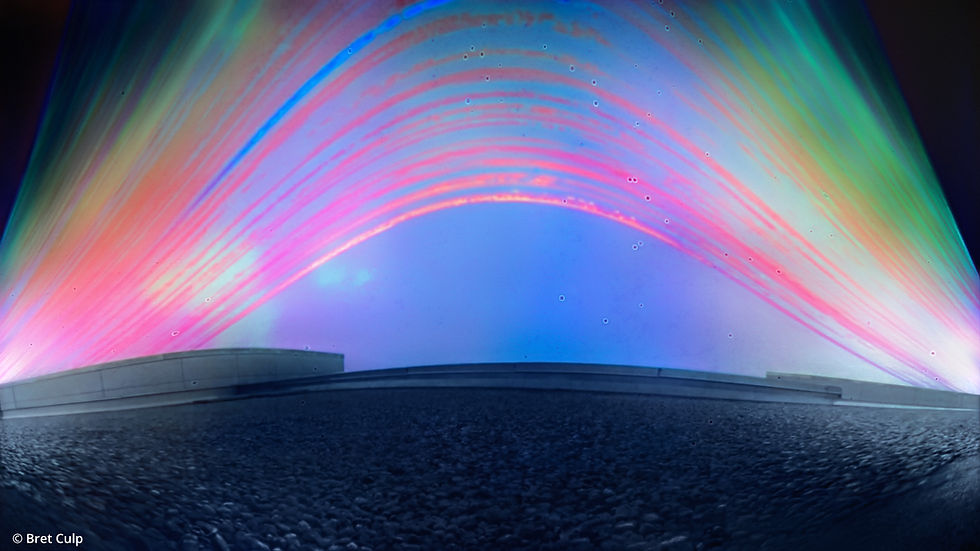
The resulting sun tracks present a gradual day-to-day change, attributable to the Earth’s 23.4-degree axial tilt and slightly elliptical orbit. The height of each track is determined by the latitude of the exposure location and the time of year it is recorded. The lowest track is produced on the winter solstice, while the highest track corresponds to the summer solstice. Missing, faint, or broken tracks occur when clouds or other obstructions block the Sun.

The colours depicted in the images are not direct representations of the scene, but rather the result of the paper’s chemical reactions to extreme overexposure, as well as the influence of uncontrollable factors such as moisture, dirt, significant temperature fluctuations, or fungus that may infiltrate the pinhole camera. Furthermore, each brand of photography paper possesses a unique chemical composition, leading to distinct colour schemes.

If developed using traditional methods, the photo paper would turn completely black and the use of a photography fixer would diminish much of the colour. Instead, the prolonged exposure times etch the image onto the paper without requiring any additional steps. A high-quality flatbed scan is then performed on the resulting negative (paper) despite its light sensitivity. Light emitted by the scanner degrades or destroys the original image as it traverses the paper. Once scanned, the image is inverted, horizontally flipped and further processed digitally using Lightroom and Photoshop.
Bret Culp is a photographer and visual effects supervisor based in Georgian Bay, Ontario.
This feature originally appeared in the TIME issue. Get your copy in print: HERE

Enjoyed this free read?!


