


Stefan Thurairatnam: Departures and arrivals

An interview with NIKON creator Stefan Thurairatnam

Stefan Thurairatnam is a self-taught and self-represented travel, lifestyle, and luxury content creator. Born in Germany to a Sri Lankan family, Stefan is based in Toronto but works everywhere and anywhere for numerous international brands. What began as a passion for travel turned into his full-time career when he traded his day job at a financial institution in favour of roaming the world, capturing natural beauty and luxury real estate for his roster of international clients.
We spoke to Stefan about his work and adventures as a Nikon Creator.
photoED: You had a steady day job that would allow you to take holidays, but you made the dramatic shift to turn travel and photography into a completely different career for yourself. What prompted this transition? What did those early days feel like for you after you had made this decision?
Stefan:
The decision came from a growing realization that photography and travel were no longer just passions — they were becoming the core of how I wanted to experience life. I was working in finance, which provided stability, but every trip I took left me more inspired than fulfilled by my day-to-day routine. Eventually, I reached a point where I had to ask myself whether comfort was worth ignoring.
The early days were equal parts exciting and terrifying. I walked away from predictability into complete uncertainty, without a road map or safety net. There were moments of self-doubt, but there was also an incredible sense of freedom. I was finally betting on myself, and that commitment changed everything.

photoED: How did you learn photography and the business of working for luxury brands?
Stefan:
I am entirely self-taught. Photography began as experimentation — learning through trial and error, and studying light, composition, and storytelling by observing the world and analyzing the work of photographers I admired. Over time, I became more intentional, treating each shoot as both a creative and a technical exercise.
The business side came later and was learned through experience. Working with luxury brands requires more than strong visuals; it requires understanding brand identity, consistency, and trust. I learned how to communicate professionally, deliver reliably, and align creative vision with commercial objectives. Every project became a learning opportunity.
photoED: What do you love most about sharing stories through photography?
Stefan:
Photography allows me to communicate without language. A single image can convey emotion, atmosphere, and narrative in a way that words often cannot. I love the idea that someone on the other side of the world can feel inspired, nostalgic, or curious simply by engaging with an image.
At its best, photography invites the viewer into a moment they may never physically experience, yet still feel connected to.
photoED: Your work is primarily showcased on social media. How do you manage the pressures of the Instagram platform?
Stefan:
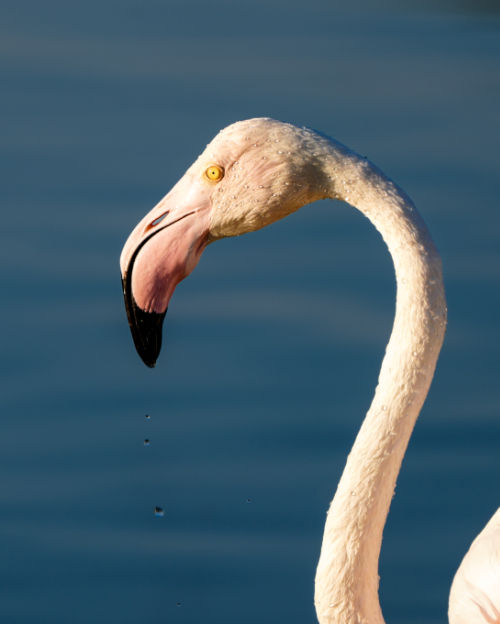
Social media can be both a powerful tool and a source of pressure. I try to remind myself that Instagram is a distribution platform, not a measure of creative worth. Algorithms change, trends come and go, but authenticity and consistency endure. I focus on creating work I am proud of rather than chasing validation. Taking intentional breaks and maintaining perspective are essential for long-term sustainability in this industry.
photoED: Whose work has influenced yours?
Stefan:
I draw inspiration from a wide range of photographers and visual storytellers, particularly those who prioritize mood and narrative over perfection. I am deeply influenced by cinema, architecture, wildlife, and remote destinations, as these elements naturally shape how I approach storytelling through imagery. Often, inspiration comes less from a single individual and more from observing how light, space, and emotion interact in everyday life.
That said, one individual who has consistently inspired me is Alex Kydd, a professional ocean and wildlife photographer based in Western Australia and a fellow Nikon Creator on the other side of the world. His ability to capture underwater environments is truly surreal — his use of natural light, composition, and timing creates imagery that feels both powerful and poetic. His work is a strong reminder of how technical mastery and patience can come together to tell meaningful stories in some of the most challenging and unpredictable environments on the planet.
photoED: What makes a good photograph?
Stefan:
A good photograph evokes feelings. Technical excellence matters, but emotion matters more. If an image can make someone pause — even briefly — and feel something, then it has succeeded. Composition, light, and timing are tools, but intention is what brings them together.
photoED: How has working in photography influenced you personally?
Stefan:
Photography has taught me patience, adaptability, and humility. Travel exposes you to different cultures and perspectives, which naturally broadens your understanding of the world and yourself. It has also made me more present — constantly observing details that might otherwise go unnoticed.

photoED: What has been your favourite or most personally impactful project or adventure?
Stefan:
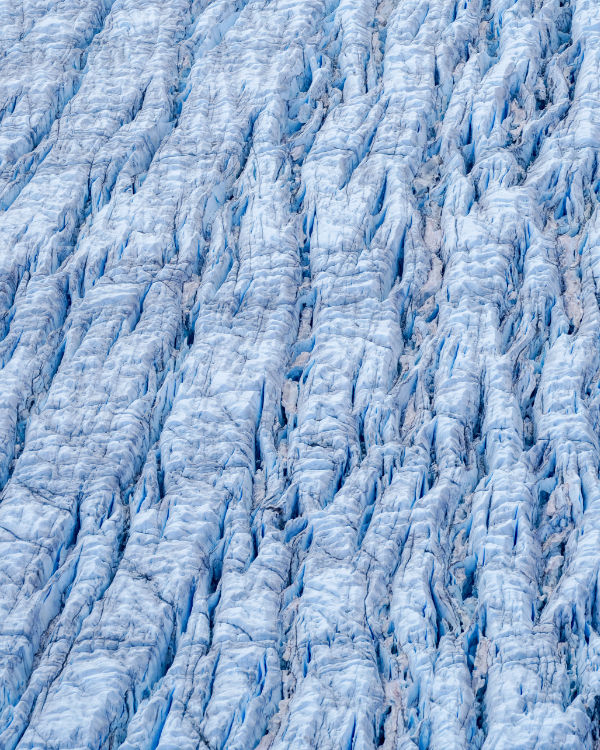
Some of the most personally impactful projects for me have been expedition-based journeys through some of the most remote regions on Earth — destinations such as Antarctica, Greenland, and traversing the Northwest Passage. These environments push you well beyond your comfort zone, both creatively and physically. Working in extreme cold, unpredictable weather, and rapidly changing light conditions forces you to be fully present and technically precise, while also trusting your instincts as a visual storyteller.
For a photographer and filmmaker, these destinations are unparalleled. The scale of the landscapes, the rawness of the wildlife, and the remoteness of the human stories create an emotional depth that is difficult to replicate elsewhere. Capturing polar wildlife, isolated communities, and vast, untouched environments allows me to translate a feeling — silence, power, fragility — through my lens in a way that feels honest and immersive.
Projects like these also allow me to truly push the limits of my Nikon gear, testing reliability and performance in some of the harshest conditions imaginable. Extreme cold, high winds, and constantly shifting atmospheres demand equipment you can trust without hesitation. Through the success of these expeditions, I will continue my journey this year with upcoming projects including a northern lights expedition in Norway, a full circumnavigation of Svalbard, and an east Greenland expedition. Together, these experiences are shaping me into a more refined expedition photographer and filmmaker, deepening both my technical skill set and my ability to tell meaningful stories in the most challenging environments on the planet.
photoED: Tell us about your hardest or most challenging day as a photographer. What keeps you going on a hard day?
Stefan:
There have been days with extreme weather, missed connections, lost light, or technical issues — all while under pressure to deliver. What keeps me going is perspective. Challenges are part of the process, and every difficult day has ultimately contributed to growth. Remembering how far I’ve come helps me push through.
photoED: Your work and life involves constant travel. What does a holiday look like for you now? Does the camera always go with you?
Stefan:
Travel and work are deeply intertwined for me, but I still value intentional downtime. The camera usually comes along, but I try not to force productivity. Some of my favourite images are captured when there is no brief, no expectation — just curiosity.
photoED: What advice do you have for photographers just getting started in any genre?
Stefan:
Be patient and stay consistent. Focus on learning fundamentals before chasing trends. Develop your own visual voice and do not compare your beginning to someone else’s middle. Most importantly, treat photography with professionalism from day one — creatively and commercially.
photoED: We simply have to ask … what are your top travel tips or hacks for travelling with photography equipment?
Stefan:
Pack efficiently and prioritize essentials. Always carry critical gear in your carry-on, use protective cases, and insure your equipment. Planning ahead — especially for climate, power requirements, and local regulations — can prevent major issues on location.
photoED: We guess you spend a lot of time in airports. We would love any great airport stories. Best airport experience? Worst airport experience?
Stefan:
Airports have become second nature to me. The best experiences are often lounges that allow you to reset between long journeys. The worst experience was definitely in Egypt. Our luggage got stuck in Cairo, and we were boarding the Steigenberger Nile Cruise in Aswan the very next day. Everything from clothes to all of our camera gear was in those suitcases. Since we were doing a campaign for Steigenberger, my wife had to go ahead and board the ship so we wouldn’t miss the start of the trip, while I flew back to Cairo early in the morning to get our luggage. I then flew straight back to Aswan the same day.
Throughout the entire process, I stayed in contact with our client, Steigenberger Nile Cruise, who connected me directly with the ship’s captain so he could keep me updated on the ship’s location once I landed back in Aswan. Since the boat couldn’t dock at night, they improvised, pulling alongside a port and setting up a plank so I could board the ship with the luggage through a window. Incredibly stressful at the time, but it makes for an unforgettable story now.
GEAR UP
What camera and equipment do you most use now? What’s your favourite lens? Tell us about your experience using NIKON products.
Stefan:
My primary camera for both filmmaking and photography is the Nikon Z8. It has become the backbone of my workflow because of its exceptional image quality, dynamic range, and video capabilities, all within a compact and durable body.
The Z8 performs reliably across a wide range of environments — from controlled luxury interiors to extreme expedition conditions — which is essential given the diversity of projects I work on.
For lifestyle and everyday content, I often use the Nikon Zf. Its design is unobtrusive and versatile, making it ideal for more intimate, candid moments while still delivering outstanding image quality.
In terms of lenses, the NIKKOR Z 24–70mm f/2.8 S II is a constant in my kit. Its sharpness, colour accuracy, and versatility make it suitable for nearly any scenario, whether I’m shooting editorial content, landscapes, or brand-focused storytelling.
For wider perspectives, especially when working with luxury hotels or airlines, I rely on the NIKKOR Z 14–24mm f/2.8 S. It’s lightweight and fast, allowing me to capture expansive interiors, architectural lines, and immersive environmental shots without distortion, which is crucial for premium brand work.
When it comes to wildlife and expedition photography, I’ve had the opportunity to work with the NIKKOR Z 600mm f/4 TC VR S and the NIKKOR Z 180–600mm f/5.6–6.3 VR. These lenses are exceptional for capturing distant subjects with clarity and precision, even in challenging weather conditions.
The 600mm f/4 delivers outstanding sharpness and subject isolation, while the 180–600mm offers incredible flexibility, smooth zoom and focus control for video, effective stabilization, and controlled focus breathing — making it ideal for unpredictable wildlife encounters.
Together, this system allows me to move seamlessly between luxury, lifestyle, and expedition storytelling. Nikon’s reliability and optical performance give me the confidence to focus on capturing emotion, atmosphere, and narrative — regardless of how demanding the environment may be.
Nikon equipment has consistently delivered performance I can trust, whether I’m photographing luxury resorts, landscapes, or expeditions. The system allows me to focus less on gear and more on storytelling, which is ultimately what matters most.
Check out all Stefan's favourite Nikon gear, HERE.

To see more of Stefan's work, find him on Instagram: @stefanthurairatnam


