


Solar-Powered: Phyllis Schwartz and the dazzling alchemy of lumen prints
In 1834, William Henry Fox Talbot set a pressed leaf on a piece of sensitized paper, covered it with a sheet of glass, and set it in the sun. Wherever the light struck, the paper darkened; but wherever the plant blocked the light, the paper remained white. The scientist called his new discovery “the art of photogenic drawing.”*
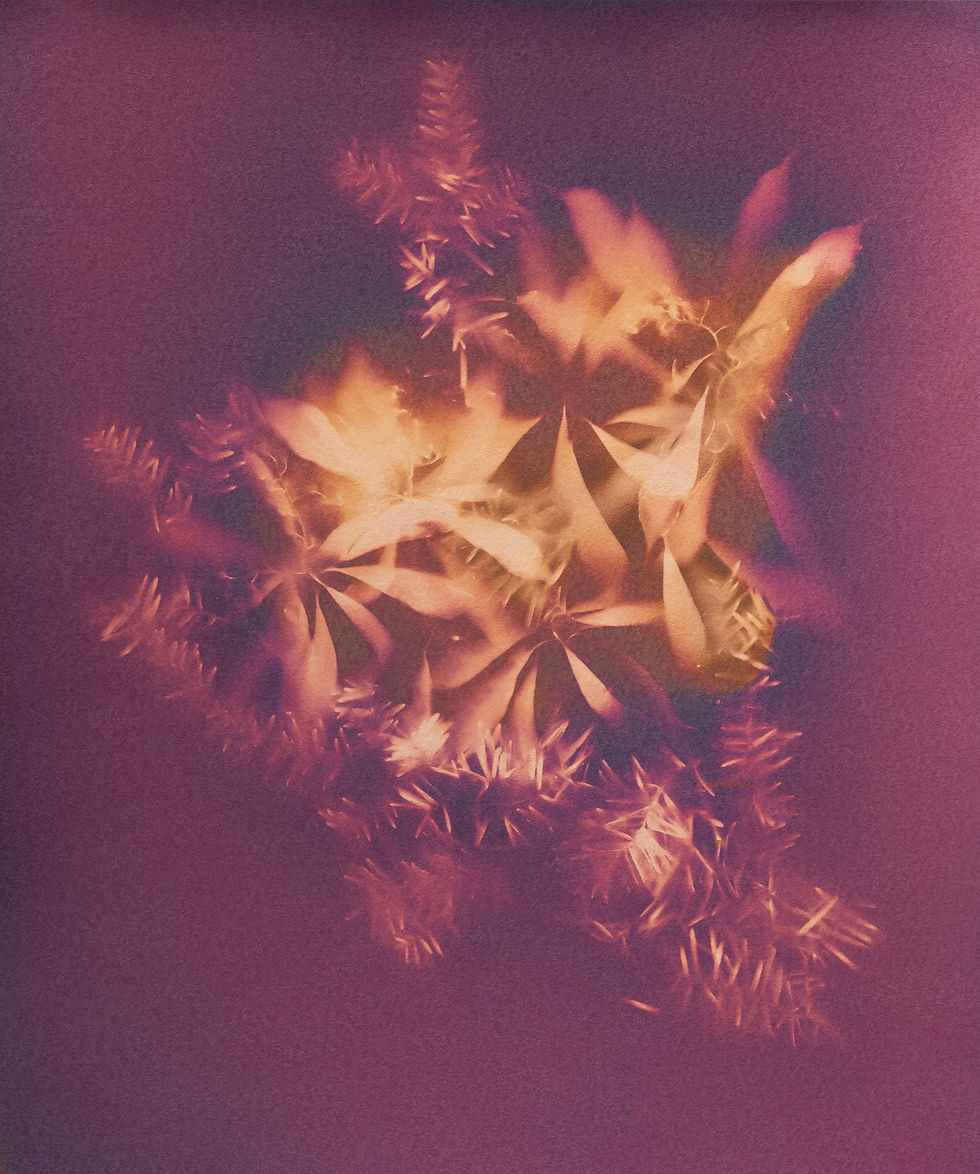
Phyllis Schwartz, a long-time devotee and master of lumen printing, describes her artistic process as a “response to the primal elements of nature.” Sensitive to the rugged environment neighbouring her Vancouver Island home, Phyllis respects her chosen materials with the mantra “Do Not Disturb Nature.” This forces her to scavenge for botanicals that are harvested strictly from the grooming or pruning of bushes, trees, and flowers.
At a time when digital photography affords artists absolute control over their output, Phyllis conversely “loves the unpredictability” of creating lumen prints, choosing to bypass all but the slightest measure of intellectual intervention over her assemblages. Even a minor change in weather, humidity, and temperature yields surprising results — a scenario she discovered during a snap Saskatchewan spring blizzard.

Phyllis composes her pieces with a degree of intention that is “partly random and partly formalist arrangement.” She deliberately strives for texture, tone, and balance, and will move things around to purposely disturb rules of composition. Invariably, she ends up with a beguiling melange of shape, colour, and line that skews a viewer’s familiar references.
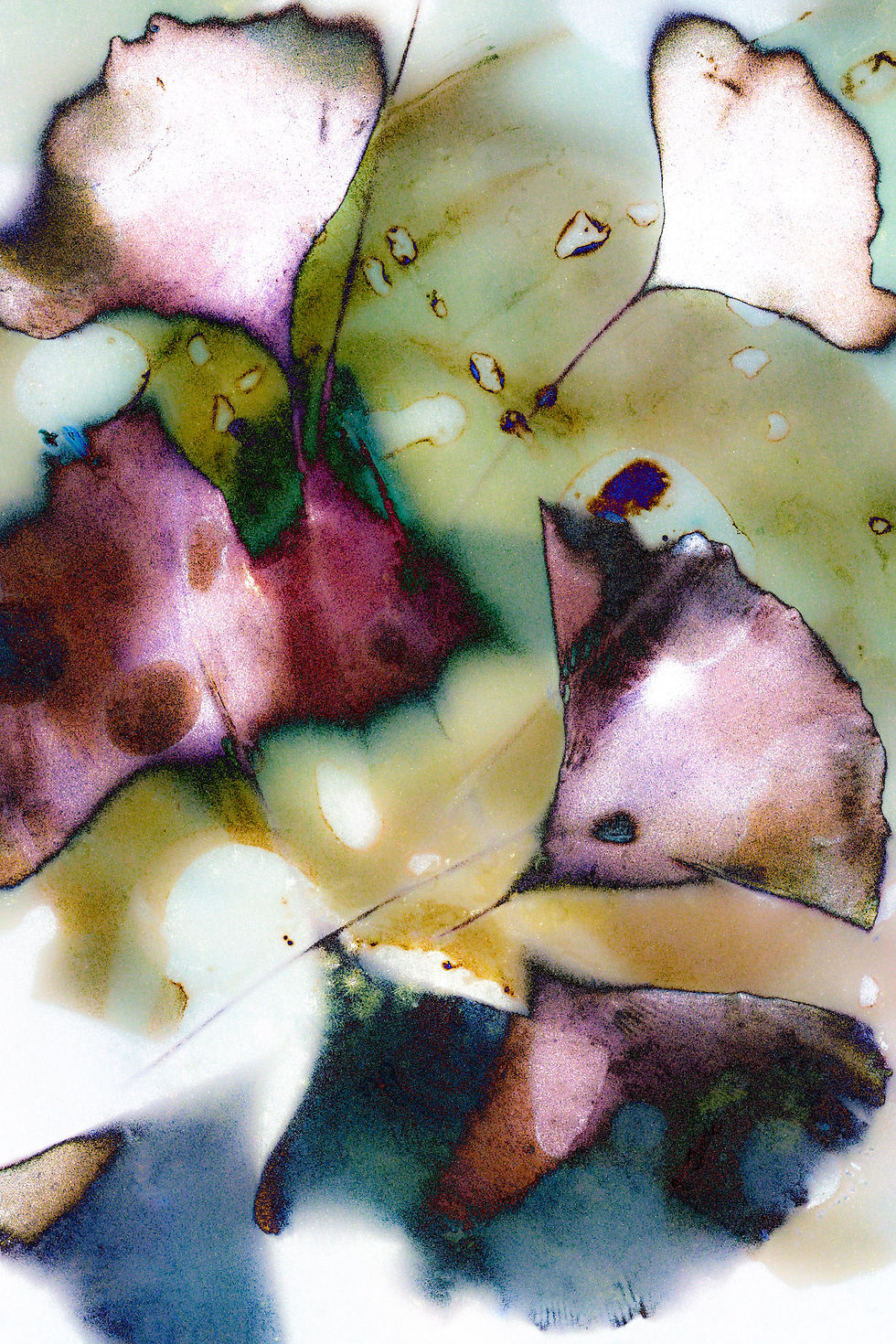
Each piece is a unique contact print, a limited edition of one. The silver gelatin photo paper used in making lumen prints will fade and darken in very little time, unless chemically fixed, rendering a fugitive print, or as Fox Talbot referred to them, “fairy pictures, creations of a moment, and destined as rapidly to fade away.”*
Fixed prints can then be scanned or photographed to preserve the transient moment of completion and further manipulated in post-production to evolve into a more conceptualized
artwork. Editions can be struck from this one “plate,” for exhibition or sale.
As with traditional lens-based photography, lumen prints capture stories of place and time, of memory and emotion. I asked Phyllis how if feels to create lumen prints, and she said, “I think we don’t realize how forceful nature is. I think most people walking around on sidewalks, driving cars, and shopping in grocery stores just living their lives don’t realize how much we are at the whim of Mother Nature.
Lumens are a dance with the life that comes from the earth.”
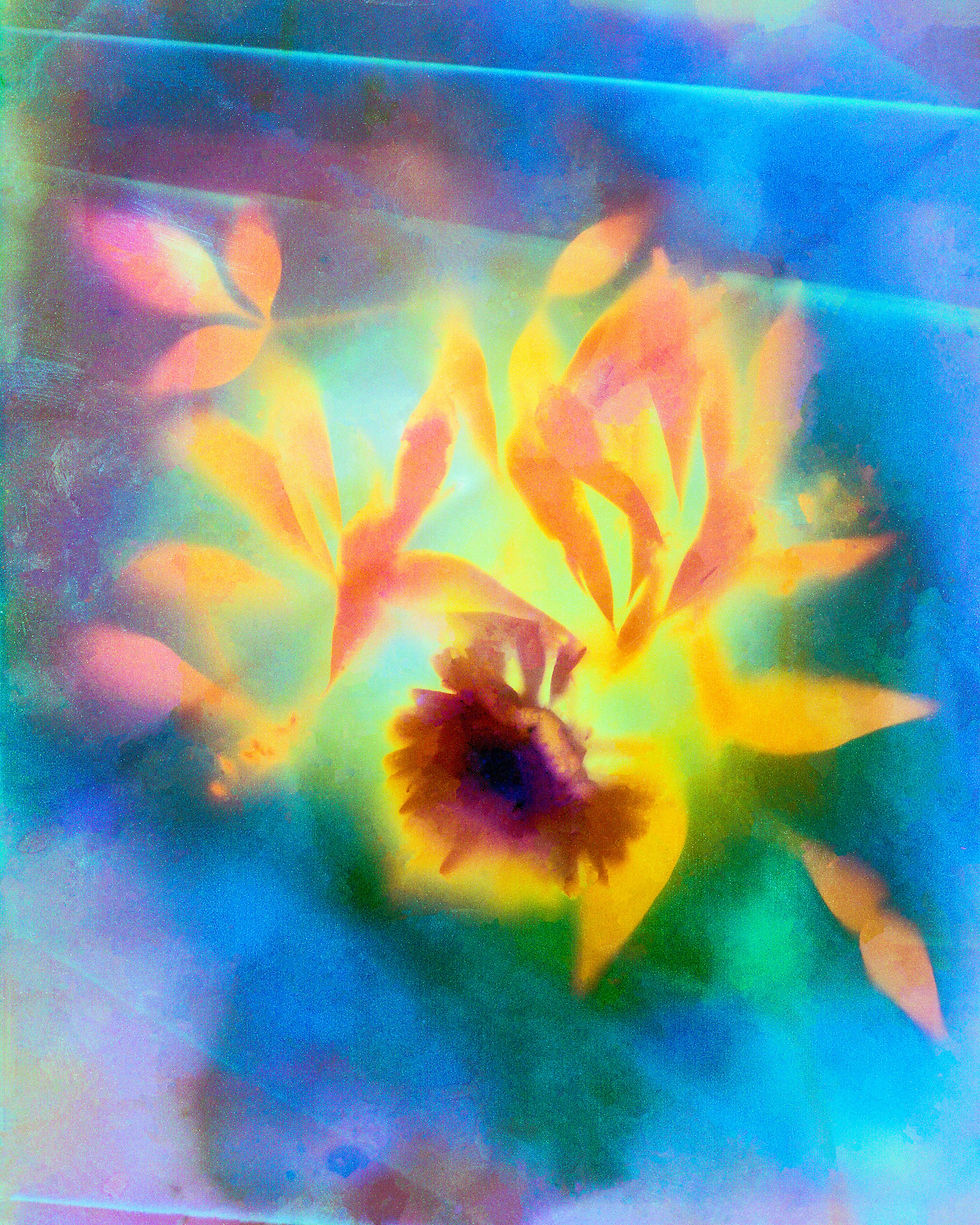
Phyllis Schwartz is a multidisciplinary artist and curator who works in photography, ceramics, and publishing. Born in Brooklyn, raised in Texas, and educated in the mid-west, Phyllis migrated to Western Canada during the 1970s, where she put down roots and grew her artist practice. She is an Emily Carr University of Art + Design graduate with a concentration in photography and the recipient of the Canon Photography Award. Her photography has been installed, exhibited, and published locally, across Canada, and internationally. Her works are in corporate, public, and private collections.
IG: @queenofmidnight
This story featured in our BOTANICALS issue.

Did you enjoy this FREE read?
Consider supporting us!
We'd love your support to continue
producing great content for you to enjoy!
and sign up for our e-newsletter to keep up with all our adventures!


